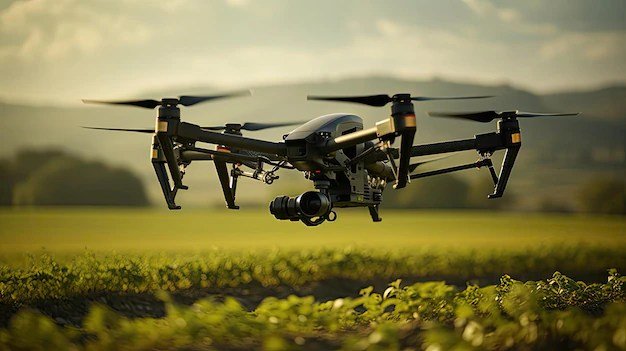
In the shadowy world where state secrets clash and nations vie for strategic advantage, the impact of AI and emerging tech on espionage & camouflage (2019 perspective) has been nothing short of a seismic shift. Forget the trench coats and microdots of yesteryear; today, the battle for information is fought in algorithms, data streams, and constellations of commercial satellites. This isn't just about faster surveillance; it's about a fundamental redefinition of what intelligence is, who gathers it, and how it’s used.
The intelligence landscape, once a tightly guarded domain of government agencies, now includes armchair researchers, private tech giants, and even ordinary citizens. This expansion, while creating unprecedented opportunities for insight, also presents colossal challenges for traditional intelligence communities grappling with cultural inertia and a deluge of information that threatens to overwhelm rather than inform.
At a Glance: The New Rules of Espionage & Secrecy
- Cyber-First Threats: Geography and traditional power no longer guarantee security; threats emanate from anywhere, by anyone.
- Data Deluge: Agencies are drowning in data, shifting from "hunting for secrets" to "verifying information" from open sources.
- Speed is King: Decision-making windows have shrunk from days to mere minutes, demanding instant intelligence.
- Wider Audience: Intelligence insights are no longer just for top brass, but for tech leaders, social media platforms, and even voters.
- Universal Competition: Anyone with a smartphone or internet connection can be a collector or analyst, challenging agency monopolies.
- AI as an Augmenter: AI automates mundane tasks, freeing human analysts to focus on complex intentions and "why" questions.
- Commercial Advantage: Commercial satellites and open-source tools offer capabilities once exclusive to governments.
- Disinformation Warfare: Adversaries leverage data itself as a weapon, making intelligence agencies the "verifier of last resort."
- Culture Over Code: The biggest barrier to innovation isn't technology, but the intelligence community's ingrained resistance to change.
The New Game Board: Why Everything Has Changed
For decades, the intelligence world operated on a relatively stable set of principles: governments held the exclusive keys to advanced surveillance, human sources were paramount, and secrets were meticulously guarded behind layers of classification. But as Amy Zegart, a leading expert from Stanford's Freeman Spogli Institute for International Studies, points out, the "AI era" has shattered this paradigm.
Today, sophisticated intelligence isn't solely a product of clandestine operations. It springs from a mosaic of sources: the sharp analysis of an open-source researcher, the vast data reservoirs of private technology companies, the persistent gaze of commercial satellites, and even the live-tweeting of a citizen on the ground. This profound shift means the primary obstacle to intelligence innovation isn't technological limitations but rather a deeply entrenched intelligence community culture. This culture, often reliant on traditional tradecraft, resistant to change, and risk-averse, struggles to fully embrace the very technologies now redefining its purpose.
The "Five Mores" Reshaping Intelligence
Artificial intelligence and the sheer volume of data streaming into existence are fundamentally transforming how intelligence is gathered, processed, and understood. These changes can be distilled into "Five Mores," each presenting both immense opportunities and daunting challenges for secrecy and surveillance.
More Threats: Beyond Borders and Bombs
The old notion that power and geography conferred security has vanished. In cyberspace, anyone can launch a significant threat across borders without firing a single shot. The United States, arguably the most powerful nation globally, is also its most vulnerable in this new digital domain.
This means intelligence officials can't just focus on traditional state adversaries like Russia or China. They must anticipate sophisticated threats from weak countries and non-state actors who can leverage emerging tech to punch far above their weight. Your digital footprint, for instance, is now a potential attack surface, whether you're a private citizen or a high-ranking official.
More Data: Drowning in the Open Ocean
We live in an age where the amount of data on Earth effectively doubles every two years. Crucially, a significant portion of this deluge comes from publicly available open sources (OSINT). This has flipped the script for intelligence agencies. They're no longer primarily "hunting for secrets" in the dark corners of the world; they're "drowning in data" that's readily accessible to anyone.
Imagine trying to find a specific grain of sand on a vast beach, but new sand is constantly being added. This is the challenge. The conventional wisdom now suggests a radical shift: start intelligence reports with open-source intelligence, using AI as the crucial key to process and make sense of it, and then integrate clandestine sources to fill the gaps or verify the nuances. This approach acknowledges that the most potent insights might already be waiting in plain sight.
More Speed: The Vanishing Decision Window
The pace of information flow and decision-making has accelerated at an almost terrifying rate. Consider the timeframes: during the 1962 Cuban Missile Crisis, decision-makers had 13 days to analyze and respond. On 9/11, that window shrank to 13 hours. Today, in a world of AI-powered analysis and instant communication, critical decisions might need to be made in 13 minutes—or even less.
This compression demands intelligence insights that are not just accurate, but also delivered with unprecedented speed. Traditional, time-consuming analytical processes are simply too slow for the modern battlespace, whether that's cyber warfare or a rapidly unfolding geopolitical crisis. The pressure is on to provide timely, actionable intelligence almost instantaneously.
More Decision Makers: Beyond the SCIF
Intelligence, once the exclusive purview of security-cleared government personnel, now has a much broader audience and impact. Consider tech company leaders grappling with foreign influence on their platforms, social media giants like Twitter and Facebook facing election interference, or even the general public struggling to discern truth from disinformation ahead of a vote.
These new "decision-makers" are outside the traditional U.S. government structure, yet their choices profoundly affect national security. The intelligence community must adapt its analytical products and communication strategies to serve this diverse and expansive group, recognizing that national security now extends far beyond the walls of secure facilities.
More Competition: The Democratization of Espionage
The final "more" is perhaps the most unsettling for established intelligence agencies: intelligence collection and analysis are now accessible to virtually anyone. The days when only nation-states could afford satellite imagery or advanced data processing are over.
Think of the Osama Bin Laden raid, where ordinary citizens were live-tweeting events as they unfolded, effectively becoming intelligence collectors and analysts in real-time. This democratization means intelligence agencies are no longer the sole proprietors of information. A key challenge is figuring out how to harness, verify, and integrate the valuable insights that emerge from this vast, open-source world, without being overwhelmed or misled. It’s a delicate balance, requiring a constant re-evaluation of who knows what, and how to stay ahead. For a broader look at this dynamic, you might want to explore Our Camouflage and Espionage hub.
AI's Role: Amplifying Humans, Not Replacing Them
Despite the hype, AI isn't poised to replace human intelligence officers. Instead, its true power lies in augmenting human capabilities, freeing up valuable human intellect for the most complex and nuanced tasks.
Automating the Mundane, Elevating the Mind
Machines excel at tasks that are repetitive, pattern-based, and data-heavy. For example, AI and machine learning can now automate jobs like counting trucks in a satellite image over time, detecting subtle changes in port activity, or even locating Chinese surface-to-air missile batteries from vast datasets of imagery. These are tasks that once consumed countless hours of human analytical effort.
By offloading these "mundane" analytical chores, AI empowers human analysts to engage in higher-level thinking. They can focus on what machines can't do: understanding intentions, wishes, desires, and the intricate cultural or political contexts that drive human decision-making. AI provides the "what" and the "where," allowing humans to delve into the crucial "why."
The Power of "Red Cells": Challenging Assumptions
One of the most innovative ideas emerging from this new era is the creation of AI "red cells." These are teams specifically tasked with using open-source intelligence and AI to compete against traditional human analysts.
Imagine two teams: one using established methods, the other leveraging advanced AI tools and OSINT. The AI red cells would actively challenge assumptions, generate alternative hypotheses, and perhaps even identify blind spots in the human-centric analysis. This adversarial approach fosters a richer, more robust intelligence product, much like how "red teams" in cybersecurity expose vulnerabilities by thinking like an adversary. It's about using AI to sharpen human intuition, not suppress it.
Beyond Satellites: The Rise of Commercial Intelligence
For decades, the pinnacle of technical intelligence involved multi-billion-dollar government surveillance satellites. These are still valuable, of course, but the landscape is rapidly changing with the proliferation of commercial satellite capabilities.
Consider companies like SpaceX, which launched 143 small satellites in a single mission. These rapidly expanding commercial constellations offer several key advantages:
- Better Resolutions: Many commercial satellites now provide imagery resolutions that rival or even surpass some government systems.
- Faster "Revisit" Rates: Instead of flying over a specific location once a day or less, commercial constellations can offer revisit rates of multiple times daily. This allows for continuous monitoring, detecting subtle changes in traffic patterns, construction progress, or port activity.
- Accessibility: Crucially, this data is commercially available. Non-government nuclear threat analysts, for example, are already leveraging commercially available imagery and machine learning tools to track sensitive developments. A striking example: the identification of a fire at an Iranian construction shed was made using weather satellite imagery and public analysis – a capability once solely within the domain of top-tier intelligence agencies.
This shift means that vital intelligence is no longer solely the product of expensive, secret government programs. It can be purchased, analyzed, and disseminated by a much broader array of actors, creating a more transparent, yet also more complex, global information environment.
The Perilous Underbelly: Disinformation and Data Warfare
While emerging tech offers unparalleled opportunities for intelligence, it also creates new, insidious vulnerabilities. One of the most significant challenges is the rise of disinformation. Foreign adversaries can now leverage AI and automated tools to flood the U.S. intelligence community—and the public—with fake information at an unprecedented scale.
Data itself has become a battleground. It's not just about stealing secrets; it's about poisoning the well of information, sowing confusion, and eroding trust. In this "spy-versus-spy battle" over truth, the intelligence community is increasingly being pushed into a new, critical role: the "verifier of last resort."
This demands a new breed of expertise. Individuals skilled in identifying "data poisoning" techniques, understanding deepfakes, and discerning legitimate information from sophisticated misdirection will be absolutely crucial. The ability to distinguish truth from fiction in a world awash with manipulated information is perhaps the ultimate camouflage challenge for the modern intelligence agency.
The Stubborn Barrier: Culture, Not Code
The greatest impediment to the intelligence community fully embracing the AI era isn't a lack of technological capability or funding; it's deeply cultural. As Amy Zegart emphasizes, institutional history, established practices, and a lingering valuation of expensive past capabilities (think those multi-billion-dollar satellites) create immense inertia.
- Rewarding the Past: Incentives often continue to reward traditional, proven methods, even if they're increasingly outdated. Risk-taking with new technologies is often discouraged, leading to stagnation.
- Hiring Challenges: Hiring practices may not prioritize the diverse talents essential for the AI era—data scientists, machine learning engineers, open-source analysts, anthropologists, and cognitive psychologists are as vital as traditional area experts.
- "Need to Know" vs. "Need to Share": The deeply ingrained "need to know" culture, while historically justifiable for compartmentalizing secrets, can become a severe liability. The pre-9/11 failure to share critical information about al Qaeda tracking across agencies serves as a stark reminder of how cultural barriers can hinder crucial information flow, even when technology exists to facilitate it.
Overcoming this cultural resistance requires more than just buying new software; it demands a fundamental rethinking of organizational structure, incentive systems, and the very definition of intelligence work.
Navigating the Future: Adapting for a New Era of Secrecy
The year 2019 marked a pivotal moment, clearly illustrating that the intelligence world was on the cusp of profound, irreversible change. For intelligence agencies to thrive—or even survive—in this rapidly evolving landscape, several key adaptations are paramount:
Embracing Open-Source as a First Resort
Agencies must fully integrate open-source intelligence (OSINT) into their core analytical processes, viewing it not as a secondary input but as a primary driver. This means developing sophisticated AI tools to sift through massive amounts of public data, identifying patterns, and generating initial insights, then using classified sources for validation and depth.
Fostering a Culture of Innovation
This requires leadership that actively encourages experimentation, tolerates failure, and rewards creativity. Agencies need to build agile teams, similar to tech startups, that can rapidly prototype and deploy new AI-powered analytical tools. This also means challenging the "need to know" paradigm, shifting towards a "need to share" mindset where collaboration and cross-pollination of information are prioritized.
Prioritizing "Human Intent"
As AI handles the "what" and the "where," human intelligence (HUMINT) becomes even more critical for deciphering intentions, motivations, and the complex human factors that underpin geopolitical events. Investing in human sources, cultural expertise, and psychological analysis will remain irreplaceable for understanding the "why."
Becoming the "Verifier of Last Resort"
In an age of rampant disinformation, the intelligence community's role extends beyond gathering secrets to becoming the ultimate arbiter of truth. This requires investing heavily in expertise around data integrity, deepfake detection, and information warfare countermeasures. They must be equipped to not only identify adversaries' disinformation campaigns but also to inoculate decision-makers and the public against them.
The journey ahead for espionage and camouflage is less about hiding a needle in a haystack and more about discerning the real needle when the entire haystack is digitally generated and constantly shifting. The successful intelligence agencies of the future will be those that master the art of leveraging technology to amplify human judgment, navigate the information deluge, and adapt their culture to a world where secrecy is challenged from every direction.