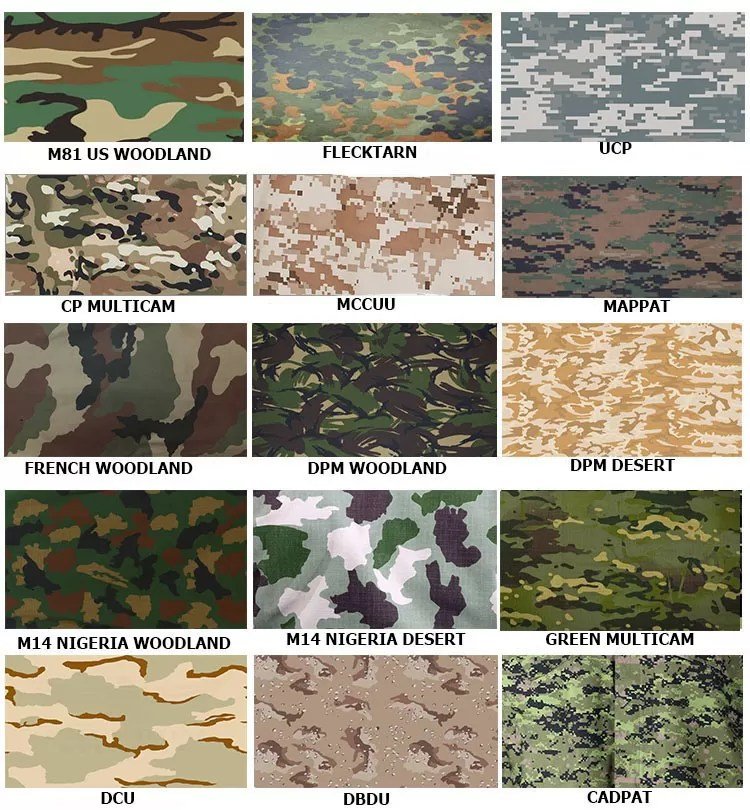
The very ground beneath a soldier's boots, the sky an aircraft traverses, or the hull of a tank rumbling into position are all battlegrounds for visibility. In the high-stakes world of military operations, being unseen isn't just an advantage—it's often the difference between mission success and catastrophic failure, between life and death. The notion of Military Camouflage in Modern Conflicts (2019 Context) represents a pivotal shift, moving beyond simple disruptive patterns to an intricate science of multi-spectral invisibility. We're talking about a stealth chess match, played out in real-time against an ever-smarter array of detection technologies.
At a Glance: The New Rules of Concealment
- More Than Meets the Eye: Modern camouflage isn't just visual; it fights detection across thermal, radar, and even acoustic spectrums.
- A Rapid Evolution: From the static patterns of the 1990s to AI-driven adaptive systems seen in recent conflicts, camouflage is in a constant state of flux.
- Science, Not Just Paint: Physics, material science, and cognitive perception are the bedrock of effective modern concealment.
- Adaptive and Dynamic: The future is about real-time adaptation to changing environments, mimicking nature's chameleons.
- An Unending Arms Race: As detection technology advances, camouflage must evolve faster, creating a relentless cycle of innovation.
- Beyond the Battlefield: Military innovations in camouflage are influencing everything from hunting gear to fashion and industrial design.
The Shifting Sands of Stealth: From Gulf War to AI-Driven Warfare
For decades, military camouflage focused primarily on visual deception. Think about the iconic jungle greens, desert tans, or the familiar "woodland" patterns—they aimed to break up a soldier's silhouette against natural backgrounds. This approach, while effective for its time, was prominently featured during the 1991 Gulf War. Coalition forces then relied heavily on tried-and-true methods: Radar-Absorbing Materials (RAM) for aircraft, thermal suppression coatings on armored vehicles, and disruptive pattern camouflage for personnel and equipment. Even simple smoke screens and infrared masking were vital for obscuring movement. These techniques significantly enhanced operational effectiveness and survivability, proving foundational to the era.
Fast forward to the 2020 Nagorno-Karabakh War, and you witness a dramatic leap. This conflict showcased how rapidly concealment had evolved by integrating AI-assisted technologies. We saw the deployment of stealth UAVs, such as the Bayraktar TB2, designed with optical blending and thermal suppression to make them virtually undetectable to ground forces. Furthermore, AI-driven adaptive camouflage systems began to emerge, promising real-time environmental adjustments. Electronic Warfare (EW) countermeasures, like sophisticated radar jamming, became standard practice, creating a multi-layered defense against detection. This trajectory highlights that the 2019 context we're exploring stood right at the cusp of this profound technological acceleration, making it a fascinating point in the history of military concealment. For a deeper dive into the broader tactics of remaining undetected, you might want to explore camouflage and espionage 2019.
Decoding the Invisible: The Scientific Principles of Modern Camouflage
Modern camouflage is no longer an art; it's a rigorous science, meticulously engineered to exploit the limitations of both human and machine perception. It’s a layered approach, tackling different detection modalities simultaneously.
Visual Camouflage: Breaking the Mold
At its heart, visual camouflage aims to make an object disappear by blending into its background or by making its shape unrecognizable.
- Disruptive Pattern Materials (DPM): These patterns, made of irregular shapes and contrasting colors, are designed to break up the distinct outline of a soldier or vehicle. By preventing the eye from perceiving a continuous edge, DPMs delay recognition and make identification harder. Think of the jagged lines and blobs that confuse the brain, forcing it to "fill in the gaps" incorrectly.
- Ghillie Suits: A staple for snipers and reconnaissance specialists, Ghillie suits mimic dense foliage, twigs, and natural debris. They add three-dimensional texture, creating shadows and forms that completely obscure the human shape, making the wearer virtually melt into the environment.
- Optical Disruption Methods: Simple yet effective, these include face paint to break up facial contours and netting to disrupt the human form. The goal is to eliminate recognizable patterns that a human observer or basic optical sensors might pick up.
- Color Theory and Environmental Blending: Beyond just patterns, the choice of colors is paramount. Woodland patterns predominantly use greens, browns, and blacks to match forest environments. Desert patterns utilize sandy tones, light browns, and grays, while urban camouflage employs grays, blacks, and muted blues to blend with concrete, steel, and shadow.
Thermal and Infrared (IR) Concealment: Hiding from Heat
As thermal imaging became commonplace, simply looking visually inconspicuous wasn't enough. Soldiers and equipment emit heat, a beacon for IR sensors.
- Infrared-Suppressing Materials: These advanced materials absorb or disperse heat, preventing it from radiating outwards in a detectable signature. They might incorporate special coatings or multi-layered fabrics that trap body heat or reflect ambient temperatures.
- Thermal Signature Management: This involves more than just suppression. Advanced coatings and material designs aim to make an object's heat signature indistinguishable from its surroundings. This could mean making a hot engine appear cooler or mimicking the fluctuating temperatures of natural objects.
- False Heat Signatures: Sometimes, the best way to hide is to deceive. Decoys emitting artificial heat signatures can draw enemy fire or attention away from actual assets.
Electromagnetic and Radar Concealment: The Stealth Game
Radar operates by bouncing electromagnetic waves off objects and detecting the return signal. Hiding from radar requires manipulating these waves.
- Radar-Absorbing Materials (RAM): These specialized materials are designed to absorb radar waves rather than reflect them. When applied to aircraft, ships, or vehicles, RAM significantly reduces their radar cross-section, making them appear smaller or even invisible on enemy radar screens.
- Electronic Warfare Countermeasures: This involves active measures like radar jamming, which saturates enemy radar with noise, or deploying sophisticated decoys that mimic friendly signatures to confuse and mislead.
- Deployable Radar Decoys and Chaff: Chaff consists of small, thin strips of aluminum or plastic, often coated with metallic substances. When dispersed, it creates a large, false radar signature that can obscure the actual target.
Acoustic Concealment: Silence on the Battlefield
Even silent movement can betray a position. Acoustic signatures, whether from vehicles, personnel, or machinery, can be detected by sensitive microphones.
- Passive Sound Suppression: This involves using sound-dampening materials in vehicle engines, equipment, and even soldier's gear to reduce operational noise. Think of advanced mufflers or insulated compartments.
- Active Noise Cancellation: A more sophisticated technique, active noise cancellation works by emitting counter-phase sound waves that effectively cancel out unwanted noise. While challenging for large-scale military applications, its potential for quiet operations is significant.
Motion and Optical Concealment: The Human Element
Even with the best gear, how a soldier moves—or doesn't move—is crucial for remaining undetected.
- Strategic Cover and Concealment: This is the age-old art of using terrain, vegetation, and man-made structures to hide. It's about understanding lines of sight and utilizing the environment to your advantage.
- Controlled Movement Patterns: Moving slowly, deliberately, and irregularly makes a target harder to spot. Avoiding predictable paths and minimizing exposure in open areas are fundamental.
- Smoke Screens and Optical Obfuscation: While traditional, smoke remains an effective tool for obscuring movement and creating temporary visual barriers, especially in conjunction with modern multi-spectral smokes that block IR as well.
- Decoy Operations: Creating false movements or deploying dummy targets can distract and mislead enemy forces, drawing their attention away from the real objective.
The Vanguard of Vanishing: Advanced Adaptive Camouflage Technologies
The pursuit of true invisibility has pushed the boundaries of material science and engineering. Inspired by nature's masters of disguise, researchers are developing technologies that promise dynamic, real-time adaptation.
- Metamaterials and Optical Cloaking: This is arguably the holy grail of concealment. Metamaterials are engineered to have properties not found in nature, allowing them to bend electromagnetic waves (including light) around an object, effectively making it invisible within specific wavelengths. While still largely in experimental stages, the potential for true optical cloaking is revolutionary.
- Electrochromic and Thermochromic Coatings: Imagine a uniform that changes color and temperature on demand. Electrochromic coatings can rapidly alter their visual appearance by applying an electrical current, allowing for instant blending into a new environment. Thermochromic coatings respond to temperature changes, either internal or external, to adjust their thermal signature.
- Quantum Dot and Photonic Technologies: These involve manipulating light at a fundamental level. Quantum dots can be tuned to emit specific wavelengths of light, potentially allowing a surface to match the exact light spectrum of its surroundings. Photonic technologies focus on controlling the flow of light, offering new ways to absorb, reflect, or refract light for camouflage purposes.
- Biomimetic and Chameleon-Like Surfaces: Nature offers the best examples of adaptive camouflage. Biomimetics seeks to replicate the dynamic color and texture alteration seen in creatures like chameleons and octopuses. This could involve surfaces with microscopic structures that can reorient or change their reflective properties in milliseconds.
- Digital Camouflage Systems: These systems use arrays of LED or e-ink displays integrated into fabrics or vehicle surfaces. Connected to environmental sensors and AI, these displays can project real-time images or patterns that perfectly match the immediate surroundings, offering dynamic blending. This type of innovation truly began to gain traction around our 2019 context, showcasing a significant leap forward.
Tailoring Invisibility: Environmental Adaptation and Material Innovation
One size rarely fits all in camouflage. The effectiveness of a pattern or technology is heavily dependent on the operational environment.
- Diverse Environments, Diverse Patterns:
- Woodland: Employs a palette of greens, browns, and blacks, often with intricate organic patterns to mimic forest foliage and shadows.
- Desert: Favors sandy tones, light browns, and muted grays to blend with arid landscapes, rock formations, and sparse vegetation.
- Urban: Utilizes grays, blacks, and sometimes muted blues or tans to match concrete, asphalt, steel structures, and shadow lines found in built-up areas.
- Advancements in Materials: The core of modern camouflage lies in its materials. Today's fabrics are lightweight, highly durable, and often multi-layered. They integrate IR-reflective properties to reduce thermal signatures and radar-absorptive properties to minimize electromagnetic detection. These advanced textiles are a far cry from the simple dyed fabrics of previous generations. However, this sophistication comes with a trade-off: high production costs remain a significant challenge for widespread adoption across all military branches.
Modern concealment strategies combine these adaptive materials with smart deployment tactics, decoys, and expert utilization of terrain. The emphasis is always on layered methods, simultaneously reducing visual, infrared, and electromagnetic signatures to create a holistic cloak of invisibility.
The Unending Arms Race: Challenges and the Future Horizon
The cat-and-mouse game between concealment and detection is perpetual. As camouflage techniques grow more sophisticated, so do the methods to pierce through them.
- Evolving Detection Technologies: New threats emerge constantly. Advanced IR and thermal imaging can pick up fainter heat signatures. Multispectral cameras can analyze light across a broader spectrum, revealing artificial materials. High-resolution radar and LIDAR (Light Detection and Ranging) systems can map environments with incredible detail, challenging even the most advanced stealth. This constant technological churn ensures that camouflage developers can never rest on their laurels.
- Innovations Through History: The drive for better camouflage is nothing new. World War II saw the widespread adoption of disruptive patterning, notably with the British Denison smock. In the early 2000s, the U.S. Army introduced its pixelated Universal Camouflage Pattern (UCP), a bold attempt at a 'universal' pattern, though its effectiveness sparked considerable debate. Today, experimental adaptive materials mark the latest chapter in this long history.
- Dynamic Adaptability: The biggest challenge for future camouflage is achieving true, dynamic adaptability across diverse and unpredictable environments. A soldier might move from a dense forest to an open field, then into an urban ruin, all within a single mission. Camouflage must adapt seamlessly and instantly.
- Durability and Cost: Smart fabrics and integrated technologies are often fragile and expensive. Developing materials that are tough enough for combat, affordable for mass production, and easy to maintain within military logistics systems is a monumental task.
- Ethical and Strategic Considerations: As camouflage becomes more effective, questions arise. How do we balance concealment with the need for transparency and identification? How can we prevent the misuse of advanced stealth technologies, and how do these advancements adhere to international laws of armed conflict? These are not trivial concerns and will require careful consideration as the technology matures. For instance, the very principles that make a soldier harder to spot also apply to sensitive installations. Understanding the complexities of this realm requires a broad perspective, and you can read more about camouflage and espionage in the 2019 context.
Beyond the Battlefield: Civilian Crossovers and Logistics
The innovations born from military necessity often find their way into civilian life, and camouflage is no exception.
- Civilian Applications: The principles of military camouflage have profoundly influenced various civil and commercial sectors.
- Hunting Gear: Hunters seek to blend into natural environments to approach prey undetected, directly borrowing disruptive patterns and natural color palettes.
- Outdoor Clothing: Performance fabrics developed for military use, offering durability, waterproofing, and breathability, are now standard in high-end outdoor apparel.
- Fashion: Camouflage patterns have become a persistent aesthetic, influencing trends and designs, moving from the battlefield to the runway.
- Dual-Use Innovations and Regulations: Many military research breakthroughs, especially in material science, have dual-use potential. While advancing material durability, waterproofing, and breathability for commercial products, these innovations also necessitate careful regulation to mitigate security concerns. A technology designed to make a tank invisible could, in civilian hands, be used for less savory purposes. The line between innovation and security is thin and often requires ongoing evaluation. In fact, many discussions around this topic in 2019 touched upon the potential for dual-use tech. It’s a vital part of the larger conversation surrounding military concealment and clandestine operations.
- Integration into Military Engineering and Logistics: Camouflage is not just about a soldier's uniform; it's an integral part of military engineering and logistics. This involves strategic planning for:
- Infrastructure: Concealing forward operating bases, supply depots, and command centers.
- Equipment: Applying advanced camouflage to vehicles, aircraft, and heavy machinery during manufacturing and maintenance.
- Supply Chains: Ensuring that camouflaged materials, paints, and specialized equipment are available where and when needed, a complex logistical challenge in itself. This integrated approach ensures operational efficiency and enhances overall security.
The Enduring Pursuit of the Unseen
Ultimately, military camouflage is a dynamic, ever-evolving field driven by the relentless march of technology and the timeless imperative of survival. While no method can guarantee complete invisibility across all sensing modalities, the continuous evaluation and adaptation of camouflage strategies are absolutely essential. The landscape of modern conflict, as observed in our 2019 context and beyond, demands an integrated, multi-spectral approach to concealment. It's about minimizing signatures, creating deception, and buying those precious seconds that can turn the tide of a battle. The quest to disappear, to become truly unseen, remains a cornerstone of military innovation, pushing the boundaries of science and human ingenuity with every passing year. To truly appreciate the breadth of these advancements, especially concerning information gathering and covert operations, you'd find value in exploring broader topics around how camouflage intersects with espionage.